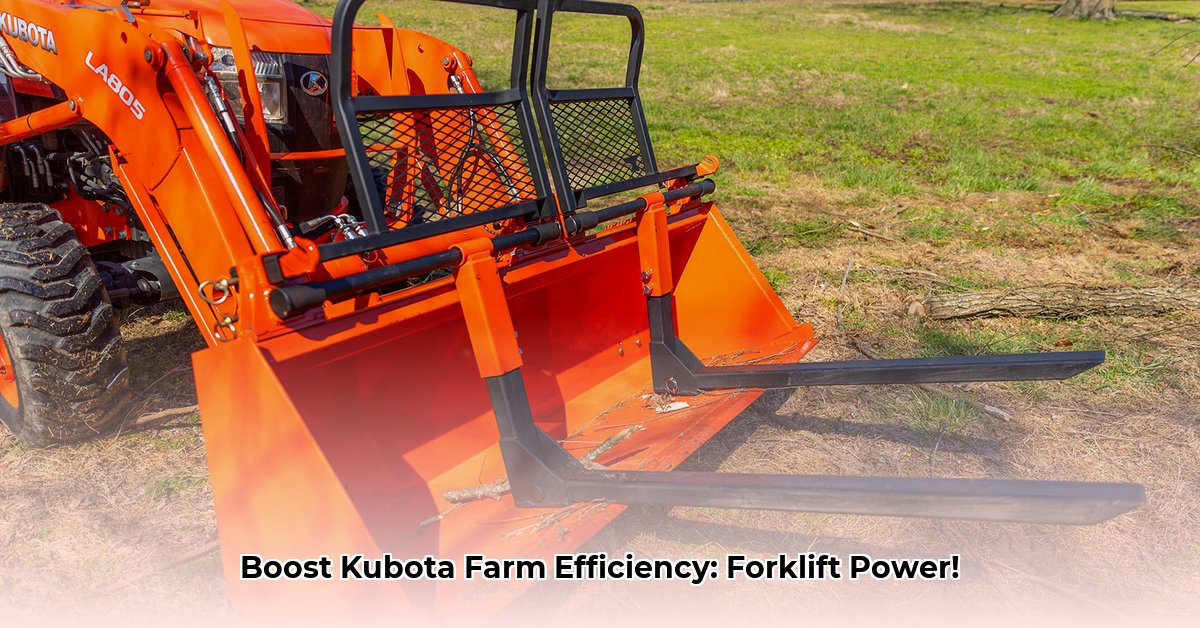
Farming demands efficiency, and the right equipment makes all the difference. Pallet forks for your Kubota tractor can transform your operations, boosting productivity and even contributing to sustainable practices. This guide provides a comprehensive overview of selecting, using, and maintaining these valuable attachments. For even more ways to boost efficiency, check out these Kubota mulcher options.
Understanding Kubota Tractor Lifting Capacity
Before choosing forks, understand your Kubota's lifting capacity. Consult your owner's manual to determine the maximum weight your tractor can safely lift. This crucial information prevents equipment damage and, more importantly, avoids potential injury. Different Kubota models (BX, L, M series) have varying capabilities; selecting the right fork depends directly on your tractor's specifications.
Types of Kubota Tractor Forks
Several fork types cater to diverse farming needs:
Pallet Forks: Ideal for moving palletized materials like feed, fertilizer, or supplies. Ensure you choose forks wide enough for your pallets.
Hay Spears: Specifically designed for handling hay bales, offering secure grip and preventing slippage.
General-Purpose Forks: Versatile options for various materials, lacking the specialization of pallet or hay forks.
Specialized Forks: Available for niche tasks like moving logs or heavy machinery parts.
Choosing the Right Forks: A Step-by-Step Guide
Selecting the appropriate forks involves careful consideration:
Lifting Capacity: The fork's capacity must exceed the heaviest load you'll lift. Overloading is dangerous.
Fork Length: Shorter forks are easier to maneuver, while longer forks handle larger loads but might be less agile.
Compatibility: Ensure the forks are compatible with your Kubota's three-point hitch. Consult your owner's manual and your Kubota dealer.
Construction Quality: Invest in durable, high-quality forks for longevity and safety.
Here's a table summarizing typical recommendations (always verify with manufacturer specifications):
| Kubota Tractor Model | Suggested Fork Capacity (lbs) | Recommended Fork Length (inches) | Typical Uses |
|---|---|---|---|
| BX Series | 800-1200 | 42-48 | Lighter tasks, smaller pallets, garden work |
| L Series | 1500-2500 | 48-60 | General farm use, larger pallets, hay |
| M Series | 3000-4000+ | 60-72 | Heavy-duty applications, large loads, bulk materials |
Safe Operation and Maintenance: Best Practices
Safety is paramount. Always:
Secure Attachment: Attach forks securely to the three-point hitch, ensuring all pins and mechanisms are engaged.
Even Weight Distribution: Distribute weight evenly to prevent tipping. Never overload.
Careful Maneuvering: Operate slowly and smoothly, especially with heavy loads. Avoid jerky movements.
Regular Inspection: Inspect forks for damage before each use; replace worn parts immediately.
Real-World Examples: Farmers Achieving Efficiency Gains
"Using pallet forks has saved me hours each week," says John, a dairy farmer. "The extra time allows me to focus on other critical farm tasks." This illustrates how efficient material handling translates into significant time savings.
Sustainability and Kubota Forks: A Synergistic Relationship
Efficient material handling reduces fuel consumption and emissions, contributing directly to sustainable farming practices. By minimizing wasted time and fuel, pallet forks contribute to a more environmentally responsible operation. This aligns perfectly with Kubota's commitment to sustainable agricultural technologies.
Conclusion: Boost Your Farm's Bottom Line and Environmental Footprint
Investing in the right pallet forks for your Kubota tractor offers significant benefits: increased efficiency, reduced labor costs, improved safety, and a smaller environmental footprint. Consult your Kubota dealer or visit their website for more information and to find the perfect forks for your needs. Don't just farm; farm smarter.